I am a nephrology fellow at UMass. I completed my Internal Medicine training at Rutgers/Jersey City Medical Center. My email address is gagan.aulakh@umassmemorial.org; any queries, recommendations, feel free to reach out to me.
Always remember, we don’t have a plan B; it’s do or die.
Dr. Abdulhassan Saad, MD Addiction Medicine Specialist & Internist
One day before the rotation
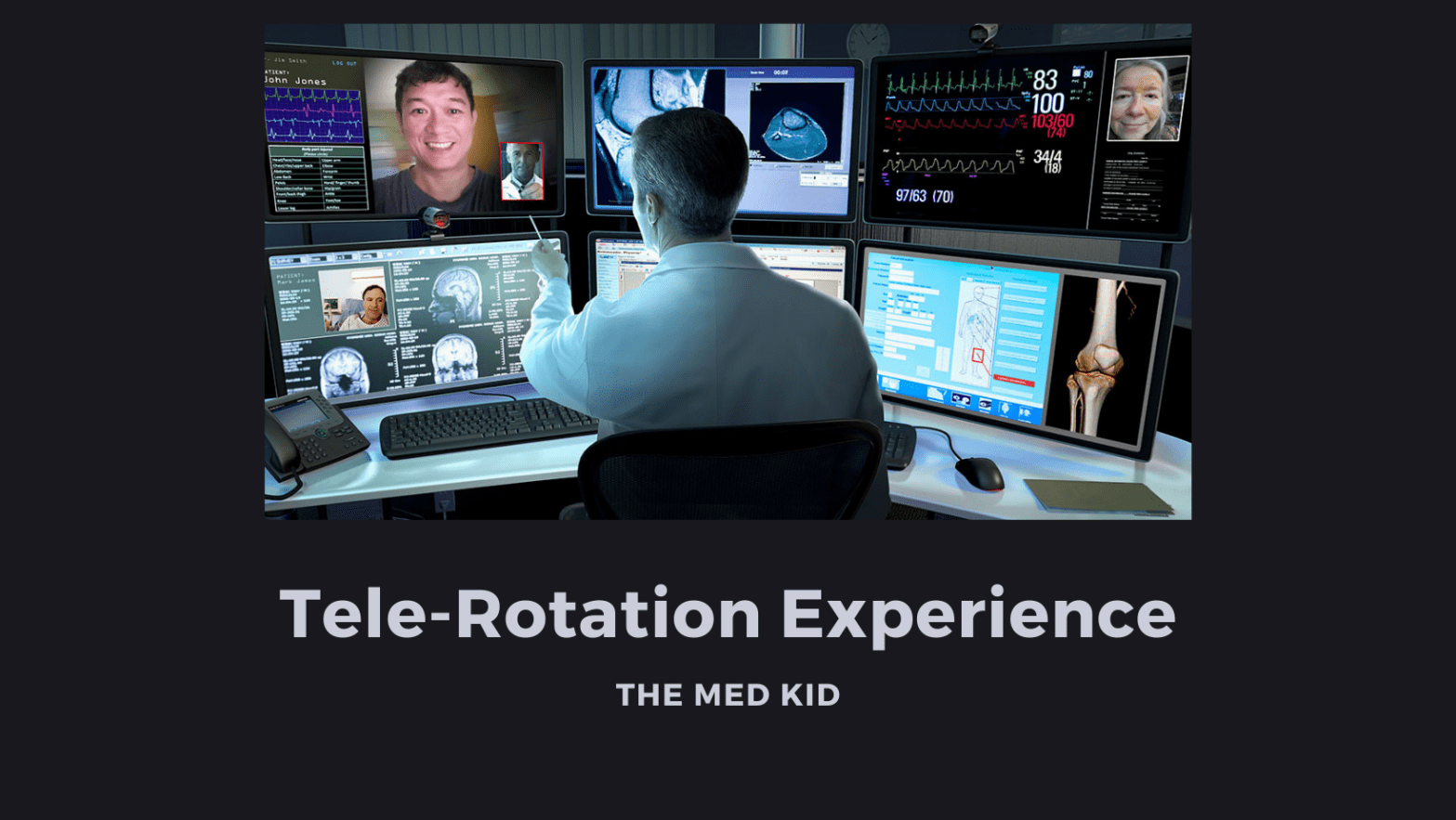
My clinical instructor emailed me the instructions for tele-rotation, and he checked my audio, video, and internet speed for a smooth tele-visit. He oriented me towards the most common pathologies seen and their management in the clinic, usage of EPIC EMR, memo templates, SOAP patient notes, check-in/check-out with doxy software, and quick assist (screen-share software), and much more. He spent half an hour over me to orient and answer my queries.
First day of the rotation
My clinical instructor added me to the WhatsApp group, where we got the link of doxy software to enter the patient’s room. We had two shifts, the morning and afternoon shifts. I was in the morning shift throughout my rotation. We had to use that WhatsApp group for every problem if we had. There were two senior interns and PA students in the office who were assisting us. Every tele-intern got a different room with another PA student.
Moreover, the 02 senior interns were on a rotatory basis. With quick assistance, we were sharing the computer screen; even I had access to EPIC. Therefore, I could write my patient notes, explore the patient’s history, labs, prior treatments, refills, and everything.
Then, a patient came inside the room. One PA student was in-person there. She introduced me to the patient. I was able to see and hear them clearly. That day, I observed how things work over there and how she was using EPIC and memo templates. After taking a brief history, we informed Dr. Saad then he came inside the patient room. We presented the case to him, he asked me some questions and taught me some TSH points.
We all interns had to submit our patient notes to the senior intern at the end of the day, which they usually returned to us after 2-3 days with feedback and constructive criticism.
First three weeks
As I got familiar with the system, I used to take the history, write SOAP patient notes, update the charts, order the refills, present the cases to Dr. Saad, and enter orders given by Dr. Saad with the assistance of a PA student. I was feeling just there; it wasn’t like to be a tele-visitor.
Last one week
Now, we got the opportunity to see patients on our own as we were there for the previous three weeks. Then the role of senior interns got more vital. If we needed to get vitals checked-up, we called senior interns with the doxy or WhatsApp group’s help. After that, we used to inform Dr. Saad; then, we used to write down the PLAN for that patient after his assessment.
My recommendation
It’s a positive attitude to modify yourself with the modifying surroundings COVID-19). Therefore, I would say go for tele-rotation provided you should keep some points in mind-
Before starting a rotation, ask-
Daily routine.
Number of patients to be seen per day.
Access to EMR (if it is limited, then how much is limited).
Ability to see, hear, and talk to the patients (because you get only to listen to them at some places).
Software usage for screen-sharing and tele-visit.
Conclusion
I am satisfied with my rotation. I learned many new things, especially the EMR system, saw various patients, SOAP patient notes, patient-physician relationships, dealing with irritable patients, and much more. Therefore, in my opinion, tele-rotation could be helpful as in-office rotation if taken seriously.
Disclaimer
I have not been paid for this. I am well aware of how financially challenging USMLE is. So any recommendation you find on this blog is from my own experience.
As a student, I struggled a lot with this question. Therefore, I compose a list where we can apply as a medical student. I would update this list from time to time, so I would be grateful if you guys contribute to this too, and we all together help each other in this journey.
If anyone does not understand the concepts of USCE, then visit this blog post.
So as I mentioned before, electives are the most beneficial type of USCE. I got so many emails regarding USCE so, I decided to write this thing up, and I try my best to include all the places and update this blog post from time to time. I would highly appreciate it if you guys contribute to this list too.
So we usually have electives, externships, and observerships.
Elective rotations
It’s the hands-on experience only acquired before getting graduated and the best kind of USCE. Because you can get this in a teaching hospital, university hospital, big-name hospital where you can impress your attendings and get IV(Interview) from the same place. You can touch patients, do procedures, have access to the EMR system, or in short, you can do anything a PGY does.
Mind it- the purpose of having some rotation isn’t only having USCE. It is the chance to get some good LORs and making contacts too.
So, having your rotation at some excellent place matters a lot. You will have contacts at some perfect place and LOR written on good letterhead.
Brand name matters; whether it’s fair or not, it’s what it is.
Usually, doctors know each other in all the teaching hospitals. So if you have a LOR or work experience with some doctor, chances are when you apply for residency, those doctors are well aware of your work and the doctor with whom you worked.
Some renowned hospitals like Cleveland Clinic, Mayo ask for USMLE Step 1 and TOEFL scores. The benefit of these hospitals is their world-class experience, brand name, and free of cost rotation. There will be more options to apply if you have Step 1 scores and some people extend their internship to maintain their undergraduate status.
Some hospitals will accept you without Step 1 and TOEFL, but they are expensive but worth it.
It is the hands-on experience we can acquire after getting graduated. The drawback of this is not many university hospitals offer this rotation, or even community hospitals don’t. That’s why it’s hard to find one.
We usually get this in some private clinics.
Why electives are better than externships-
We can have an elective rotation in a University Hospital.
The fee structure is almost the same; then, we should take the value of our investment.
We get LOR, USCE from a prominent place. The programs where we apply for residency may or may not know those private clinic doctors.
Most programs have criteria of 3 months of USCE and 3 LORs to apply to their program. You can check Frieda for a better idea.
It’s called shadowing, where you can only observe, can’t touch patients, can’t do procedures.
It is the least beneficial experience.
The only good thing about this kind of experience is getting in some university hospitals. So you can make contacts over there.
However, the tricky part of this experience is that you have to pay the same amount of money, and some programs don’t consider this experience as USCE.
I would highly recommend you look at FRIEDA to know the criteria of programs that applicants they accept.
So, at last, in my opinion, if you are qualified, then to go for elective rotations. If not eligible, then choose from the other 02 options.
Role of organizations
There are so many organizations, agencies that claim to get you USCE after taking such a tremendous amount of money. I would say, don’t go for those. They even don’t clarify that where they will rotate you or it’s some private clinic. I am not saying that rotation isn’t worth it; I’m saying the money isn’t worth it.
Best Tip
Whenever you are in the US for taking Step 2 CS or any rotation, go to the nearby clinics to ask for a position for observership. Some clinics will refuse, but some may offer a position to you free of cost. This is the position for which those organizations are taking such a tremendous amount of money. Moreover, trust me, finding observership isn’t difficult if you are in the US.
At last, thank you for reading this far. Kindly share this with your friends, and if you have any questions, don’t hesitate to email me. I will respond as soon as I could.
Once you are in med school, it’s never early to start the USMLE preparation. Here I will try to explain the two bases, first on curricular and second on an extracurricular basis. The right information at the right time is the power to excel in USMLE, so here it is.
What we need to apply for the residency
Curriculum vitae (CV)
Personal statement (PS)
USMLE transcript (which will include your all step scores)
ECFMG certificate (ECFMG will issue this certificate after completing USMLE Step 1, 2CK, and 2CS)
Letter of recommendations (LORs)
The United States Clinical Experience (USCE).
Medical school transcript (it’s a document stating your all clinical rotations and subjects you have studied in med school)
MSPE (Medical school performance evaluation)
Photograph
Professional years
If you find yourself mugging any subject or topic then you will go in wrong direction because that won’t be useful for your USMLE steps. It’s a wastage of your energy.
Because USMLE is all about understanding the concepts thoroughly and memorization the concepts. After studying a topic, you should be able to answer these five questions,
What
Why
Who
Where
How
So focus on the concepts of Anatomy, Physiology, Biochemistry, Pathology, Pharmacology, and Microbiology. Side by side always keep First Aid (FA) open to get the idea that what is written in First Aid and are you getting FA or not. Always do PATHOMA for Pathology; there is no alternative to this to date.
If you aren’t getting your professors in med school, you can watch Dr. Najeeb’s video lectures. Kaplan and Boards&Beyond are good too. I did Kaplan, Dr. Najeeb, Pathoma.
Extracurricular activities
Everything you are doing in med school will matter either you’re volunteering or participating in any activity.
Keep in mind this all you will write in your CV and Program Directors (PD) ain’t interested in the certificates you are having. In the interview, they will talk and ask about your experiences while doing these activities, so you can’t lie. PDs are excellent for taking IVs; that’s why they are Program Director. They don’t take more than a sec to catch you up for lying.
Your options are,
Volunteer in a health camp
Volunteer in an awareness program
Participation in sports, online games, quiz, playing an instrument, or anything
Assisting some attending to his research work
Write an article in the newspaper
Join an organization like Red Cross or any NGO and volunteer with them
Assist in organizing any event, conference
Join the student council, magazine editor, secretory, etc.
It is a very rough list, but you have to you what other options are available at your place and do whatever is doable.
USCE
It is my favorite part of guiding you, as I wasn’t able to get this at the right time.
Electives are considered as number one type of clinical experience as this experience is hands-on so you can examine patients, do procedures, and all. But the main problem we as the IMGs suffer is that when we get to know that these electives are necessary we get our graduation completed by then. Because the eligibility to do elective will end on the day you get graduated. And it’s highly competitive to get the position for very self-explanatory reasons.
So in India, our eligibility period is in between after we pass our final year exam to the ending of our internship. It changes with the country, so find yours.
It’s okay if we apply in January (starting of internship) because it’s good to secure the position way before. All over the world, people wait to grab the positions as soon as applications get open up.
Curricular activities
There is a section in ERAS CV where you will write your med school awards.
It could be anything like,
Best Intern award
Any medal you got
Distinction
Again it’s a very rough list. Look at other options available in your med school.
Hobbies/Interests
Keep a unique hobby or interest on which you can talk about for 15 minutes. It is the section we usually underestimate, and at last, we don’t find any hobby or interest to talk about because all we did to date is just the hardcore study.
It could be like,
Meditation and Yoga
Calligraphy
Trekking
Hiking
Stone Skipping
Painting
Soccer or any sport
Reading or Writing
Literature
Stand Up Comedy
Brewing Beer or anything.
I met a person who had an interest in beekeeping. He sounded fascinating, but I was on the dumber side at that time. My friends have a lot of traveling and off-roading experiences but I incline towards reading and meditation.
These things will give you content to speak up your personality during IVs as no one wants to do work with a dull person. These are some things I got in my mind while writing this blog post, and these are the advice I give to all of my juniors. So take anything from this all which you find useful.
If anyone has ever told you that step 2 CK is easier than step 1, that information is inaccurate by all means, and you have to trust them on your own risk, period. Moreover yes!! my wishes will be with that person, even no number of wishes will save him from his disappointment after looking at the exam questions at Prometric.
My take on the exam
The exam will leave you speechless, the difficulty level is 9/10. It’s better to know this before rather than knowing when you’re taking the exam. So be mentally prepared.
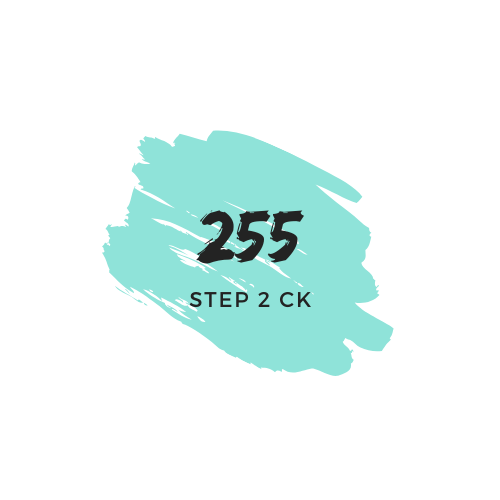
Performance on exam day is important, if I was mentally prepared as I told in the first point, I would have scored 260 (I am very happy with my score).
Take a break after every block, wash your face, take a part of your chocolate and some protein bar to get energized for an hour block. Energy drinks and water are vital parts of your exam day. Take your hand towel with you at the Prometric.
Don’t get burned out in the last phase of your preparation, keep normal routine in the last days. I did extensive study during that time and you won’t believe on exam day I was so exhausted that I didn’t want to be there for 9 hours.
People who’re getting speed issues– Do try to read questions as fast as you can. You’ll get this habit with time and don’t spend time on minor details, in the final exam if they have given you a 7 lined question- out of 7, 4 lines will be unnecessary stupid detail, your work is to find necessary 3 lines to answer that question. Start reading a question from the first line unlike step 1 where we started from last.
“If you’re reading a question twice, you’re wasting your time” This isn’t a hard and fast rule, but I would highly recommend you try this, I applied this and my speed was improved but if you’re reading twice even then it’s fine provided you’re reading fast.
Don’t spend a lot of time over UWorld, minor details- they won’t ask, you just need to know the basic concept of the question, but it’s just very hard to apply. I knew this before even then I used to spend 15 minutes over an explanation and after 2-3 days, I used to forget the minor details I’ve learned.
For those whose scores ain’t improvingIt’s all about “Highly Condensed Study” This rule applies to step 1 and CK both. Revise over and over again, whatever you’ve studied in the last month or 15 days or whatsoever. Because we tend to forget what we’ve studied before. We get very limited time in the exam, so we can’t think much over there, so whatever you studied- has to be on your tips, fresh in memory.
Don’t understand concepts only, memorize them too.
Keep heart sounds, abstract, etc lengthy questions for last, if you ain’t confident enough in such kind of questions.
Don’t spend your money on NBMEs.
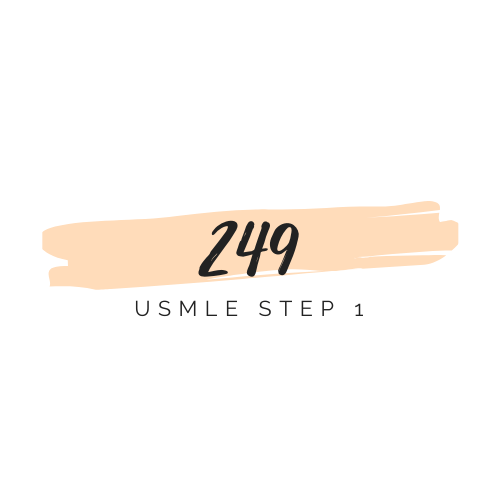
Take Step 1 before CK, even if you’re a final year medical student, lots of information is needed from step 1 basic core. Be practical. Denial won’t lead you anywhere, but reality will. My Step 1- 249
Always read all the options, quickly rule out every other choice.
In the final exam no one can be sure that this is the right answer, so learn to exclude options. It’s more or less about your best guess.
Keep a smart SP always, no one can understand you and from what you’re going through, we all need a support system.
Resources
UWorld ( first pass with incorrect questions, the second time- 80% done with just rapid looking at incorrect questions without explanations)
First Aid Step 1(last month)- I was so good in FA during step 1, so just went through quickly. I would recommend keeping FA on the side always while doing UWorld. It will help you to meet the unmet points.
I annotated extra points from online UWorld, revised those notes, tables in last week before the exam. There isn’t a drawback I guess, but I got 1 question directly from one table that I wouldn’t have studied if I did online UWorld because the time taken by online UWorld revision is much more than the revision of tables directly from those notes. Moreover, if you have less time, just go through the tables/algorithms of notes, don’t read the text.
Importance of CMS-
I don’t know they helped or not, but I did form 5,6 for Internal Medicine, Surgery, Neurology. But I didn’t remember what I’ve studied in the last 2 weeks before the exam from CMS, so I would recommend that you can do CMS for 2 reasons, either you will revise quickly before the exam or you won’t expect to remember anything as you’re doing for the sake of practice more questions.
Importance of NBME 6,7,8-
Don’t do online, just do offline- all the 3 NBMEs. Follow this advice and you will thank me later.
Exam day experience
Lots of ECGs, heart sounds.
Sometimes ECG is for distraction, they’ve asked something else and will give you normal ECG, you’ll spend a half minute in detecting that it’s the normal one and at the last, they’ve asked something different and it’s annoying, I know.
2 abstract questions- one was in the first block, I marked unknowingly, that was too hard to solve, second was in the last block- that was easy. I wasn’t even good at doing those type of questions, but I did the last one because the pattern was like 3rd-4th standard kids English paragraph questions, they gave me the abstract and asked the questions whose answer was hidden in that abstract, so had to find it where.
So don’t worry, if I did that, you can do it.
Best Tip
You won’t have time to overthink, or even think, mark the option you have seen somewhere in UWorld or something is known to you, that must be the right option. Don’t go for complicated ones. Exam made me so uncomfortable and made me think that I should have extended and all things, so it’s normal, but it’s too hard to believe.
Mistakes I did
Took 9 months for prep, I was slow, 4-5 months are enough if you’re doing right and smart things.
Didn’t revise All UWorld notes tables throughout the preparation. I started in the end.
Got burned out in last days, don’t ever do that, if people are saying save your energy for the big day, apply that, don’t make other people’s mistakes, life isn’t that bigger. Surrounded by so much negativity, keep your surrounding people good and supportive If you find someone who is negative or brings you down in any way, just leave that space because that isn’t yours.
Took NBME 7, discouraged me or we can positively take that, I started studying more, but that was under some kinda pressure, so don’t take NBME 7 seriously, if your personality is like to take everything seriously- then don’t ever take that,
Things I would do if I start all over again
In last month, I’ll do the whole UWorld again, not with explanation only with educational objectives and questions.
I tried to keep not so as usual tips and tricks here. Now let’s see how you guys will respond. In my opinion, this will be more useful for those who are in the intermediate phase of the preparation.
In a nutshell-
NBMEs are super under predictive, so don’t get discouraged.
Do UWorld nicely, very nicely. By this, I mean- at the end of the day, you should know the educational objectives of UW questions.
The final exam will be conceptual, like UWSAs.
Exam day and your mentality are very important factors, which we consider insignificant usually.
Why NBMEs underpredict and UWSAs predict
This is my very personal opinion. NBMEs will check how well you memorized First Aid, mind it- the only memorization. If you forget only one word from First Aid, your question- will be wrong, for sure.
UWSAs will check the core concepts. You have to drive one thing from another, have to integrate the concepts, and the question won’t be straight forward. The questions will be tilted in some way, as same as the final exam.
How the final exam will be
Don’t worry at all. Most of the questions, you must have studied somewhere in UWorld. This is for sure.
The same most stereotypical case will be presented to you like 40 years old, African American female presented with some kind of lung problem must be something with sarcoidosis, we usually do hundreds of these type of questions in UWorld.
Then what should you do- just think over there, use your brain, focus, and integrate the concepts.
If the question stem is simple, options will be tilted in some way and if options are simple then question stem will be tilted in some way.
Heart sounds, ECGs will be there, so be prepared. I can’t recommend a specific resource for these.
How to attempt a question
I got this in the very end phase of my preparation, and I found this very useful.
As I told you, they will ask the same HY concepts differently, same stereotypical case will be presented so choose the simplest one, don’t over-think, don’t think that how USMLE people can ask a simple concept like this.
For example, if there is a male patient with some abdominal pain, and you’re thinking about acute cholecystitis, so just review it again, because the stereotypical case is fertile fatty forty female with abdominal pain.
Another example, second newborn female having some obstruction in GIT, and you’re thinking about pyloric stenosis then review it again because the stereotypical case is firstborn male newborn usually presented with pyloric stenosis.
These things you will learn throughout UWorld. These are just some examples to tell you guys what I want to say.
Secondly, you always have to choose the most appropriate option, always exclude things to exclude the options. The third is always look over all the options, I mean it always even if you’re damn sure about your choice, still do it.
And keep lab values always open, their monitor screen is too big, not like our laptops, so it won’t compromise your question stem length.
If you’re not sure about heart sound questions, do these in last, don’t waste your time over that. I took 4 minutes, and I got short of time at last, and I left 2 questions unread.
Manage your time properly. In UWSA 2 I mismanage the time, last 4 questions I left unread, same happened in my final one, though it was because of heart sounds, we can’t blame them too.
Mistakes I did
I took a lot of time for preparation, delayed my exam unnecessarily.
Did NBMEs with explanations, with lots of extra searching, googling, and all, I recommend this, but only if you’re able to revise before the exam, I didn’t revise, so at last, I forgot the questions of NBMEs.
Didn’t do the Heart sounds.
Unable to manage the time during the exam.
Underestimated the UWorld a little bit.
The question we always ask ourselves
“Do we need to know every minor detail of UWorld explanation”
The answer is NO.
You just need to know the educational objective, that’s it. UWorld isn’t like First Aid, playing games with us that there are some hidden words, we usually miss and the question comes from that missed part. UWorld isn’t designed this way.
You just have to know the basic concept aka the educational objective. If there is “a word” in the explanation that you don’t get, it’s okay, focus on the basic concept not on that word, and just move on. If that word is important, UWorld has already made a question on that. It’s now UWorld people’s responsibility.
My resources
First Aid ( I don’t remember how many times I’ve read this, different chapters; different times)
UWorld (2 times, 2nd pass was just my weak areas depicted by NBMEs)
Pathoma (I did it religiously)
Sketchy Micro (highly recommended)
Did neuro from Dr. Najeeb and Kaplan ( you can leave Dr. Najeeb, but just don’t leave Kaplan videos of neuroanat, you will feel the difference)
Started my preparation with Kaplan videos, idk those helped or not.
Boards and Beyond videos.
Assessments-
Somewhere in Aug 2018- UWSA 1- 251
Sept 24 NBME 17- 234
Dec 16 UWSA 2- 243
Jan 13 NBME 18- 238
Jan 18 Free 120- 77%
Jan 21- The final exam.
UWorld and First Aid
You need to understand First Aid word to word. For this UWorld will help you.
Mentality
I could write a whole post on this.
If you’re positive, happy, confident, and having an instinct that you can do it, then nothing can stop you.
I know so many people who sacrificed everything, live alone knowingly to avoid disturbance from family, break up in relationships, etc. It may seem helpful in the short term, but at last, you will be exhausted. At the end of the day, you need someone with whom you can talk, share. So don’t get hard on yourself, and everyone needs some kind of emotional support and all.
No one is supposed to know everything. I used to ask numerous simple questions, even on this day I may not be able to answer the simplest question.
Here, perfection is the key to misery. Some people are waiting for 2 years to be their NBMEs 240,250. For being matched, scores are much needed but USCE, LORs are important as much too. So its better to move on, and do some rotation and impress people there instead of being stressed here and ruining your peace.
Last month preparation- 243(UWSA2) to 249
It’s all about “highly condensed study” this is how AMGs take their exam with just 4-6 weeks of preparation.
I revised FA with annotations in this month, some chapters once and some twice didn’t do UW.
Exam day
I was so happy on that day, so much excited that finally step 1 will be over and it made a difference.
Don’t be anxious, stay cool, and calm.
I took a break after every block, I used to wash my face, took a bite of chocolate, protein bar, some water, and red bull I talked to myself in the mirror, that everything will be fine, you’re doing great, good luck sweetie, etc.
So good luck guys, be positive and optimistic, you will be fine.
 The Med Kid